Screencheat makes screen-peeking the core of split-screen combat
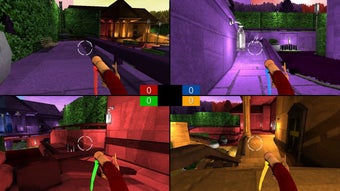
Screencheat, developed by Samurai Punk, is an action party shooter that refashions local competition into a visual puzzle. It stages quick multiplayer matches where players must read other players' views to locate invisible opponents, creating a memory-driven loop of short skirmishes and rapid positioning. The package includes multiple match types, customization mutators, and AI opponents for practice. The game targets couch-party crowds and fans of classic split-screen shooters seeking loud, social rounds.
It forces players to read screens instead of relying on direct sightlines
The game makes invisible player models the rule, so locating opponents depends on interpreting other players' camera feeds. This design pairs with ten distinct one-hit-kill weapons, each with different firing rates and movement trade-offs; examples include a blunderbuss, a hobby horse, and an explosive teddy bear. Matches reward map memorization and positional thinking rather than damage management, placing tactical emphasis on observation and short-term prediction.
Match types and mutators keep sessions fast and variable
Screencheat offers a variety of play structures, from standard Deathmatch to modes like Murder Mystery and Capture the Fun, and a total of nine game modes are available. The game supports up to eight players and preserves split-screen viewpoints even in online play, while a suite of customization options and wacky mutators lets groups alter round rules mid-session, producing unpredictable and socially driven matches.
Visuals and audio prioritise clear landmarks and readable cues
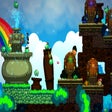
Maps are deliberately colour-zoned and built around distinct landmarks to help players triangulate opponents, with eleven colour-coded arenas that favour rapid recognition over realistic detail. The audio design supplies punchy cues that support quick reads, and the interface keeps each player quadrant visible for reference. These choices make spatial inference immediate, which suits loud party settings where visual clarity matters more than fidelity.
Approachability hinges on memorization tools rather than lengthy onboarding
The game includes solo time trials and AI bots for training, so players can practice without a full squad. Despite practice options, the loop can grow repetitive for solitary sessions, as noted in external reviews; the one-hit-kill ruleset and reliance on landmark recognition create a steeper cognitive demand for new players. Social groups gain the most from the learning curve, while solo players use bots to rehearse maps and weapon timing.
In summary, Screencheat rewards social play and spatial memory
In summary, Screencheat is a mischievous, social pick for players who enjoy loud, competitive local matches and sharp map recall; it favors short, intense rounds over extended solo campaigns. Players seeking long single-player progression or gradual character growth find the format less satisfying, but groups who prize banter and rapid skill expression get a compact, high-energy experience.